 Save
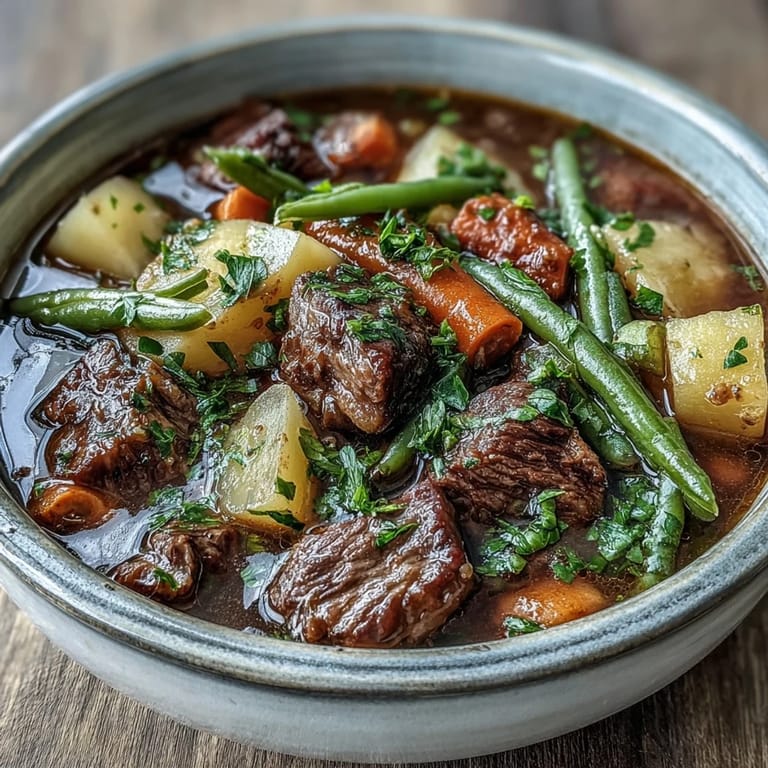
Save My neighbor stopped by on a gray February afternoon, and I had nothing in the kitchen but beef, root vegetables, and time. She stayed for lunch, and by the time we finished that first bowl, she was asking for the recipe—except there wasn't one, just intuition and whatever I could remember from my grandmother's kitchen. That's when I realized this soup wasn't fancy or complicated; it was just honest food that made people linger at the table longer than they planned to.
I made this soup for my daughter's soccer team after a tournament that ran into the evening, and watching those tired kids warm their hands on the bowls while eating was worth every chopped carrot. One of the parents asked if I was a professional cook—I laughed and told her the secret was just showing up and doing the work, nothing glamorous about it.
Ingredients
- Beef chuck, cut into 1-inch cubes (1.5 lbs): Chuck has enough fat and connective tissue to become incredibly tender during the long simmer, which is exactly what you want here.
- Olive oil (2 tbsp): Use it to get a proper sear on the beef; don't skip this step even though it feels like it takes forever.
- Onion, diced (1 large): The foundation of flavor, so take a breath and chop it well—it breaks down into the broth and becomes invisible but essential.
- Garlic, minced (3 cloves): Add it after the other vegetables soften or it'll burn and taste bitter, trust me on this one.
- Carrots, sliced (3 medium): They stay slightly firm even after cooking, which gives the soup texture and natural sweetness.
- Celery stalks, sliced (2): Often overlooked but it rounds out the flavor in a way nothing else does.
- Potatoes, peeled and diced (2 medium): They thicken the broth naturally as they break down, so don't use tiny pieces.
- Parsnip, peeled and diced (1, optional): If you use it, the soup gets an earthier note that makes people wonder what you did differently.
- Green beans, cut into 1-inch pieces (1 cup): Add them early enough that they soften but late enough that they don't completely dissolve.
- Frozen peas (1 cup): These go in at the very end so they stay bright and don't turn to mush.
- Diced tomatoes, undrained (1 can, 14.5 oz): The acidity brightens everything, and you want that juice in there.
- Beef broth (8 cups): Check the label for sodium—some broths are saltier than others, and you'll adjust at the end anyway.
- Bay leaves (2): They disappear into the background but remove them before serving or someone will find one in their spoon.
- Dried thyme and oregano (1 tsp each): These are your backbone herbs; they don't overpower but they're always there.
- Black pepper and salt (½ tsp and 1 tsp): Start with what the recipe says and taste as you go—salt is personal.
- Fresh parsley, chopped (2 tbsp for garnish): A handful of green at the end reminds you that something alive just went into your bowl.
Tired of Takeout? 🥡
Get 10 meals you can make faster than delivery arrives. Seriously.
One email. No spam. Unsubscribe anytime.
Instructions
- Sear the beef until golden:
- Heat your oil until it shimmers, then add the beef in batches so it actually browns instead of steaming. You'll hear it sizzle and smell something rich—that's the good part happening. It takes about five to seven minutes total, and don't rush it.
- Build the flavor base:
- Once the beef is out, toss in your onion, carrots, and celery without cleaning the pot first; all those browned bits are flavor. After five minutes of softening, add the garlic and stir constantly for just a minute so it wakes up but doesn't burn.
- Combine everything into the pot:
- Return the beef, add all your vegetables and broth, then sprinkle in the herbs and seasonings. Stir it once so nothing sticks to the bottom, and you're ready for the long cook.
- Let it simmer low and slow:
- Bring it to a boil first, then drop the heat way down, cover it, and let time do the work for an hour and fifteen minutes. You'll check on it a few times and stir; the kitchen will smell like home.
- Finish with the peas:
- After the beef is fork-tender and the carrots are soft, stir in the frozen peas and let them warm through for ten to fifteen minutes. Don't cook them longer than that or they'll lose their color and texture.
- Taste and adjust:
- Remove the bay leaves, then taste it. Salt and pepper are your friends here—add what feels right.
- Serve with warmth:
- Ladle it into bowls, scatter parsley on top, and hand it to someone you care about.
 Save
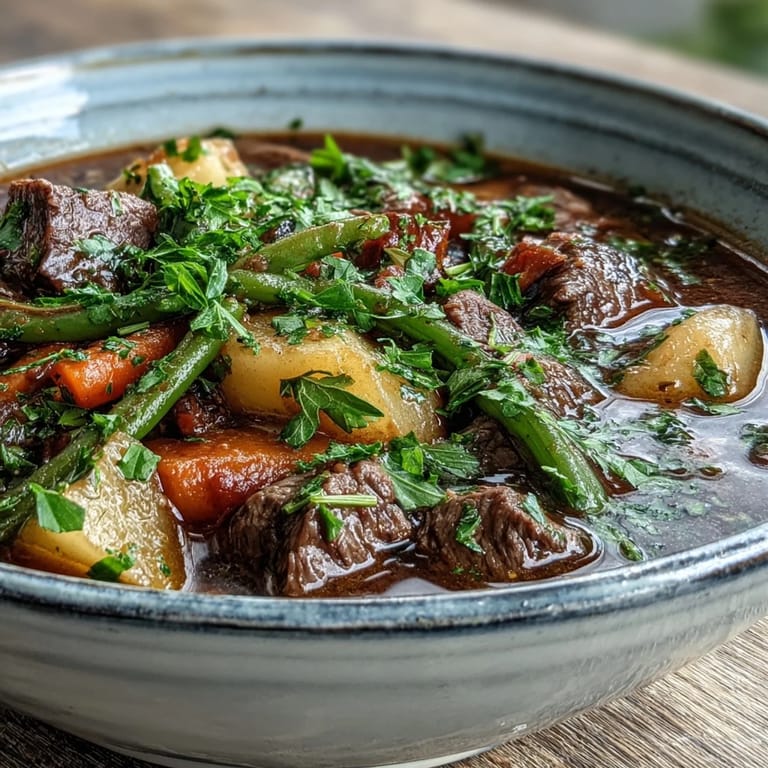
Save My son came home from college unexpectedly one March evening, and I had this soup simmering when he walked through the door. He sat at the kitchen table for three hours just talking while we ate bowl after bowl, and somewhere between the second and third helping, I realized the soup wasn't the point—it was just the reason we were sitting together. When he left the next morning, I sent him home with a container of it in his bag.
Why This Soup Works Every Time
There's a reason beef and vegetable soup has been made in kitchens for generations—it's forgiving. You can substitute vegetables depending on what's in season or what you have, swap beef broth for chicken if that's what's in your pantry, even add a splash of red wine if you're feeling fancy. The long, gentle cooking means small mistakes get smoothed out, and the flavors just keep developing as it sits.
Storage and Reheating Wisdom
Leftovers genuinely taste better on day two or three because the flavors have more time to meld and deepen. I always make at least a double batch because this soup freezes beautifully for up to three months, and having containers of it in the freezer feels like security. Just thaw it overnight in the refrigerator and reheat gently on the stove, maybe thinning it with a splash of broth if it's thickened too much.
Variations and Serving Ideas
Once you've made this soup a few times, you'll start seeing it as a template rather than a prescription. Try swapping the potatoes for sweet potatoes if you want something slightly sweeter, or add diced turnips for an earthier angle. Serve it with crusty bread for soaking up every drop, or with a grilled cheese sandwich on the side if you want to turn it into something more substantial for hungry people.
- A splash of Worcestershire sauce or smoked paprika at the end adds depth without making it taste like a different dish.
- Fresh thyme sprinkled over the top instead of (or alongside) the parsley changes the aroma in the best way.
- Keep tasting as the soup simmers—your tongue is the best judge of when it's ready.
 Save
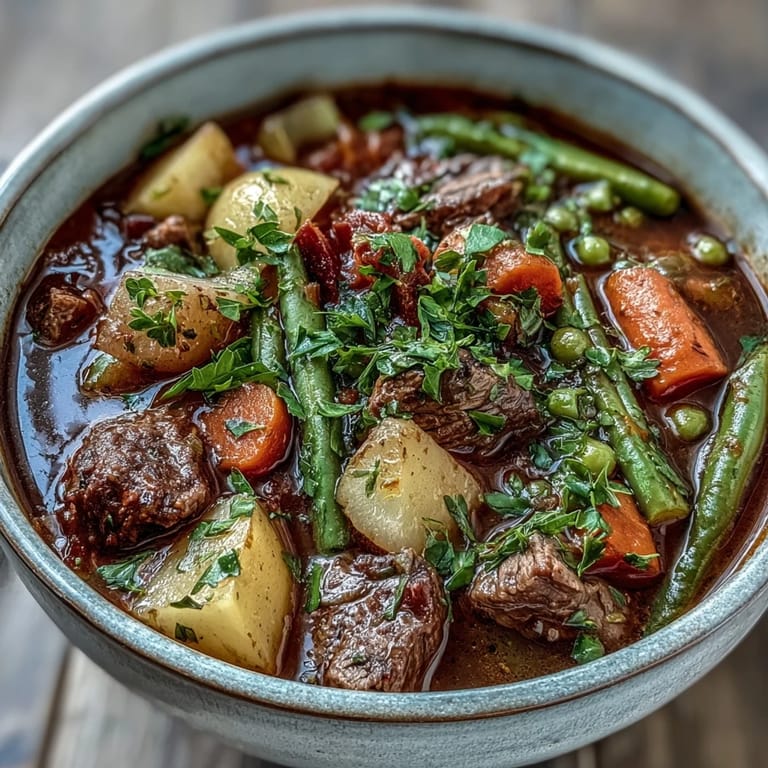
Save This is the kind of soup that pulls people to the kitchen just to see what's cooking, and it's simple enough that you can make it on a weeknight but good enough that it feels special. That's really all you need.
Recipe Guide
- → How long does beef and vegetable soup take to cook?
The total cooking time is approximately 1 hour 45 minutes, including initial browning and simmering until the beef becomes tender and vegetables are perfectly soft.
- → Can I freeze this soup for later?
Yes, this soup freezes exceptionally well. Allow it to cool completely, then store in airtight containers for up to 3 months. Thaw overnight in the refrigerator before reheating.
- → What cut of beef works best for this soup?
Beef chuck is ideal because it becomes tender and flavorful during long simmering. Other cuts like stew meat or round steak also work well for this type of soup.
- → Can I make this in a slow cooker?
Absolutely. Brown the beef first, then add all ingredients to your slow cooker. Cook on low for 7-8 hours or on high for 4-5 hours until the beef is tender.
- → What vegetables can I substitute?
Feel free to swap potatoes for sweet potatoes, add turnips or rutabaga for earthiness, or include other vegetables like corn or zucchini based on your preferences.
- → How can I make the broth more flavorful?
Add Worcestershire sauce, smoked paprika, or a splash of red wine during cooking. Using homemade beef broth instead of store-bought also enhances the depth of flavor.