 Save
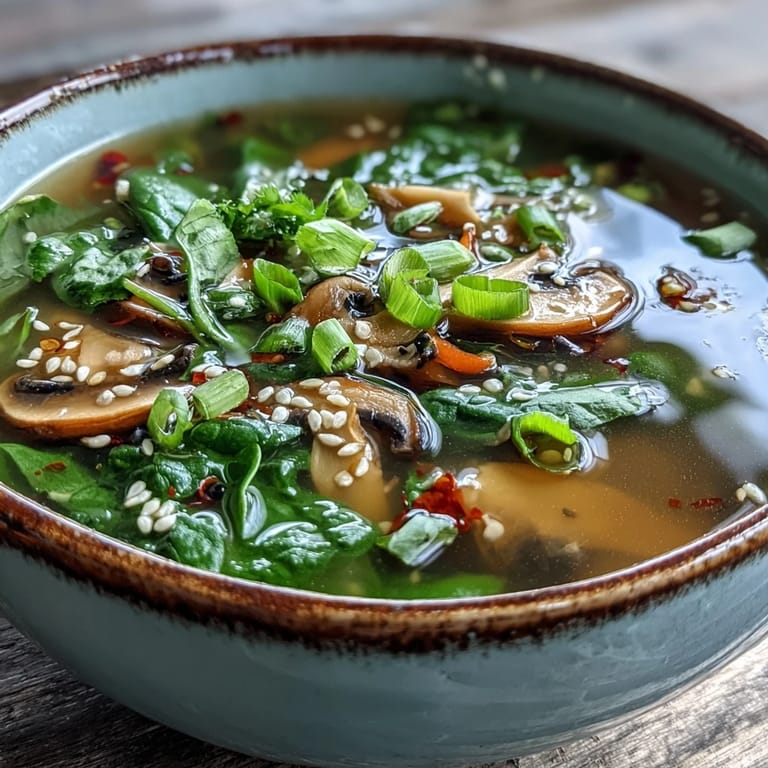
Save There's something about a steaming bowl of miso ginger soup that makes even the coldest afternoon feel manageable. My first time making this was actually by accident—I'd grabbed what I thought was chicken broth from the pantry, only to realize halfway through that I'd picked up vegetable instead. Rather than start over, I decided to lean into it, added extra ginger because that's what I had within arm's reach, and discovered something better than my original plan. That bowl became my go-to remedy for those winter days when nothing feels quite right, and now I make it almost weekly.
I made this for my neighbor last February when she'd just gotten over a nasty cold, and she actually texted me the next day asking for the recipe because her daughter demanded it again. That moment—when someone asks for seconds or wants to recreate something you made—that's when you know you've landed on something real. Now whenever I simmer the ginger and garlic, I think of how a simple pot of soup can feel like the most generous thing you can offer someone.
Ingredients
- Vegetable broth (6 cups): Use low-sodium so you can control the salt yourself as you taste through cooking—store-bought broths vary wildly in how aggressively they season themselves.
- Fresh ginger (2-inch piece): Peel it with the edge of a spoon rather than a knife; you'll waste less and it's somehow faster once you get the hang of it.
- Garlic (2 cloves): Thin slices disperse better into the broth than minced, and they soften into almost nothing by the time you serve.
- White or yellow miso paste (2 tablespoons): This is the soul of the soup—don't skip the step of whisking it with hot broth first or you'll end up with clumps.
- Shiitake mushrooms (1 cup): Their earthiness is why this soup tastes so grounding; cremini or oyster mushrooms work if that's what's in your market.
- Baby spinach or bok choy (1 cup): The leafy green keeps things light and adds a gentle bitter note that balances the miso's saltiness.
- Carrot (1 medium): A thin julienne cooks quickly and adds a quiet sweetness that people notice without being able to name it.
- Green onions (2): Save some white parts for cooking and reserve the green tops for a fresh scatter on top—you get two different flavors from one ingredient.
- Toasted sesame seeds (1 tablespoon): Buy them already toasted or toast them yourself in a dry pan for thirty seconds; the nutty flavor is the finishing note that makes it sing.
- Fresh cilantro and chili oil (optional): These are your personal preferences—add heat if you like it, skip the cilantro if you're not on team fresh herbs.
Tired of Takeout? 🥡
Get 10 meals you can make faster than delivery arrives. Seriously.
One email. No spam. Unsubscribe anytime.
Instructions
- Bring broth to a gentle simmer:
- Pour your vegetable broth into a large saucepan and turn the heat to medium. You want to see slow, lazy bubbles breaking the surface, not a rolling boil that'll reduce your broth before you've even added vegetables.
- Infuse with ginger and garlic:
- Add your sliced ginger and garlic to the simmering broth and let it alone for about ten minutes. Your kitchen will smell incredible—that's how you know the flavors are waking up and moving into the broth.
- Build the vegetable layer:
- Stir in the mushrooms and carrot slices and let them cook for five minutes until they're tender enough to cut with a spoon but still have a little structure. This is the moment where the soup goes from being broth with stuff in it to being something whole.
- Prepare the miso carefully:
- Ladle out one cup of the hot broth into a small bowl and add your two tablespoons of miso paste. Whisk them together until completely smooth—no lumps hiding in the corners. This step matters because miso is a living thing full of probiotics that heat will kill, so we're protecting it by diluting it first.
- Reintroduce miso to the pot:
- Turn your heat to low and pour the miso mixture back into the soup, stirring gently to combine. From this point forward, resist the urge to boil—keep the heat low and steady so those good bacteria survive.
- Wilt in the greens:
- Add the spinach or bok choy and green onions and stir until they soften, which takes about one minute. You'll see the green onions lose their rigidity and the spinach collapse into something tender.
- Taste and adjust:
- Take a spoon and try your soup now. If it needs more savory depth, add another half tablespoon of miso whisked in broth. If it needs salt, a splash of soy sauce works better than adding more miso.
- Serve with intention:
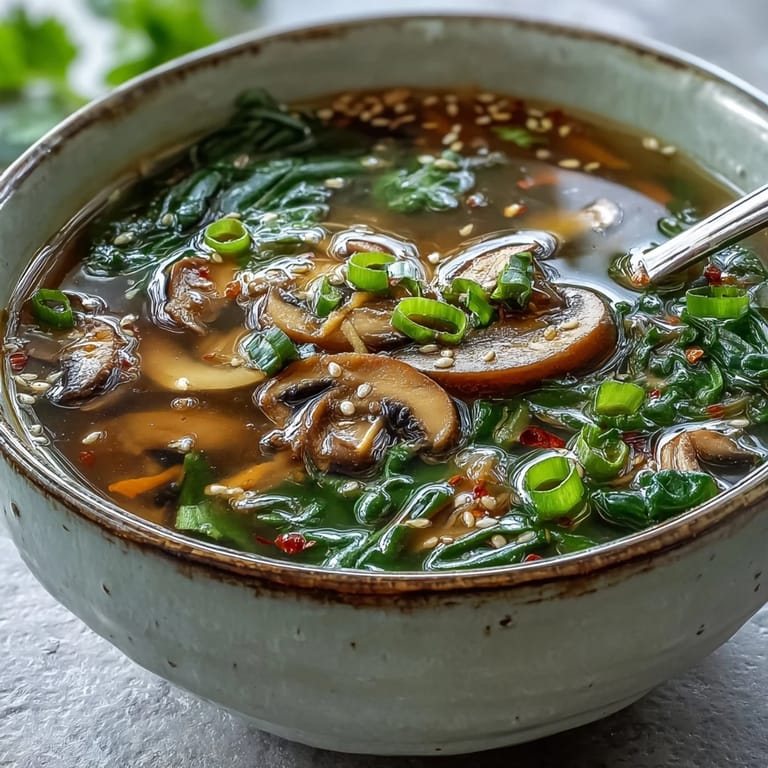
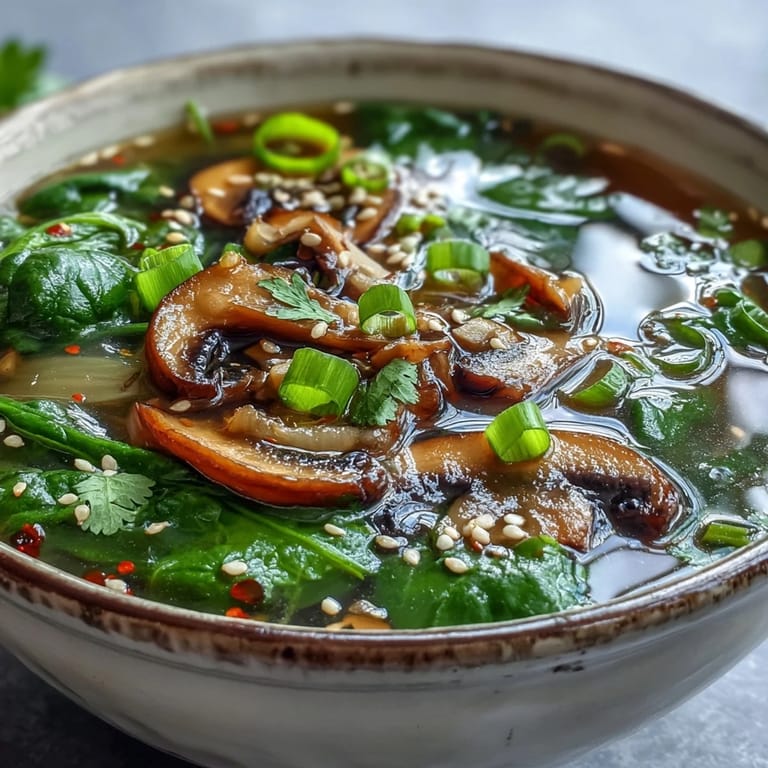
- Ladle the soup into bowls and scatter sesame seeds, cilantro, and a drizzle of chili oil across the top. The garnishes aren't just decoration—they're the reason someone will finish the whole bowl.
 Save
Save I learned the hard way that this soup is even better the next day—the flavors settle and deepen overnight, so if you have leftovers, don't apologize for them. My partner actually prefers day-two servings reheated gently on the stove, which tells you something about how the recipe keeps.
Ways to Make It Your Own
The foundation of this soup is forgiving enough that you can build on it without losing what makes it work. I've added everything from tofu to soba noodles to whatever tender vegetables were about to turn soft in my crisper drawer. The key is respecting the miso—keep that base pure and you can play with almost everything else.
Storage and Reheating
Keep any leftovers in a container in the refrigerator for up to four days, though honestly it rarely lasts that long in my house. When you reheat, do it slowly on the stove over low heat rather than the microwave—this prevents the miso from breaking and keeps the texture alive instead of making it taste overcooked.
What Makes This Soup Winter Medicine
Ginger has this reputation for being healing, and it earned it—it settles your stomach and warms you from the inside out in a way that feels almost medicinal without tasting like medicine. The vegetables give you real nutrition, the miso connects you to something traditional, and somehow the whole thing together becomes more than the sum of its parts. There's a reason this bowl keeps showing up on my table from November through March.
- Make this when someone you care about isn't feeling great, because warm soup with intention is one of the most honest gifts you can offer.
- Taste as you go and adjust the miso to your preference—some people like it whisper-quiet in the background, others want it to announce itself.
- Keep your ingredients prepped and your heat low, and this soup will teach you the difference between rushing and cooking.
 Save
Save This soup has become my winter language—the way I say I'm thinking of you, the way I comfort myself on hard days, the thing I make when I want to prove that good food doesn't need to be complicated. Make it your own, taste it boldly, and let it warm you the way it's warmed me.
Recipe Guide
- → Can I make this soup ahead of time?
Yes, prepare the broth and vegetables in advance, but add the miso paste and fresh greens just before serving to preserve the probiotics and prevent wilting.
- → What type of miso works best?
White or yellow miso provides a mild, slightly sweet flavor that pairs beautifully with ginger. Red miso offers a deeper, more intense taste if you prefer stronger umami notes.
- → Is this suitable for meal prep?
Absolutely. Store the cooled soup in airtight containers for up to 3 days. Reheat gently without boiling to maintain the beneficial enzymes in the miso.
- → Can I add protein to make it more filling?
Cubed silken tofu, cooked edamame, or shredded chicken would all complement the flavors beautifully. Add these during the final few minutes of cooking to warm through.
- → How can I adjust the spice level?
Increase the amount of fresh ginger or add more chili oil and red pepper flakes for heat. For a milder version, reduce the ginger and omit the spicy garnishes.
- → What vegetables can I substitute?
Kale, Swiss chard, or napa cabbage work well instead of spinach. Feel free to add daikon radish, snap peas, or bok choy stems for extra crunch and nutrients.